
Her trengs en bildetekst. Photo: Saami Council
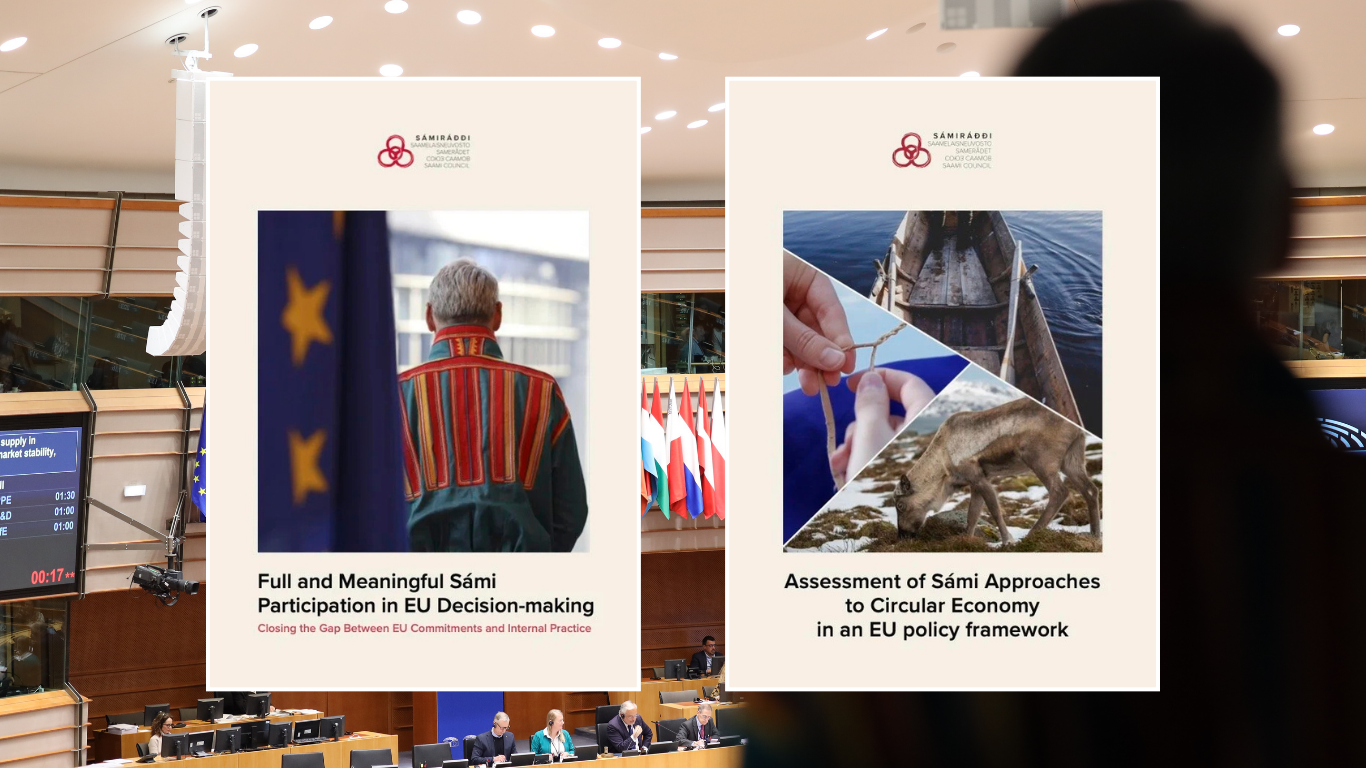
The Saami Council is pleased to announce the release of two foundational reports produced under the EU-funded project Sámi Influence and Knowledge Exchange in EU Policy (SIKE).
Funded by the European Maritime, Fisheries and Aquaculture Fund (EMFAF), the SIKE project was launched in April 2024 to empower the Sámi People, strengthen internal capacity, and build a stronger, more structured dialogue between Sápmi and European Union institutions.
As the EU’s decisions increasingly impact Sámi lands, waters, livelihoods, and the rights of the Sámi People, the two studies offer concrete recommendations on how the EU can close governance gaps and integrate Indigenous Peoples’ values into major policy frameworks.
Report 1: Full and Meaningful Sámi Participation in EU Decision-making – Closing the Gap Between EU Commitments and internal Practice
Released June
As the only recognized Indigenous People within the European Union, the Sámi hold a distinct political and legal status under international law. While the EU acts as a global advocate for the rights of Indigenous Peoples, it currently lacks a dedicated internal framework for Indigenous Peoples’ participation in its own policymaking.
“EU decisions increasingly shape the future of Sápmi, yet Sámi participation in EU policymaking remains limited.”
– The EU must translate its commitment to the rights of Indigenous Peoples into meaningful and structured participation. This report provides concrete recommendations on how to achieve this and ensure Sámi voices are heard in decisions affecting our lands, livelihoods and future, says Elle Merete Omma, Head of the EU Unit at the Saami Council and author of the report Full and Meaningful Sámi Participation in EU Decision-making - Closing the Gap Between EU Commitments and internal Practice.
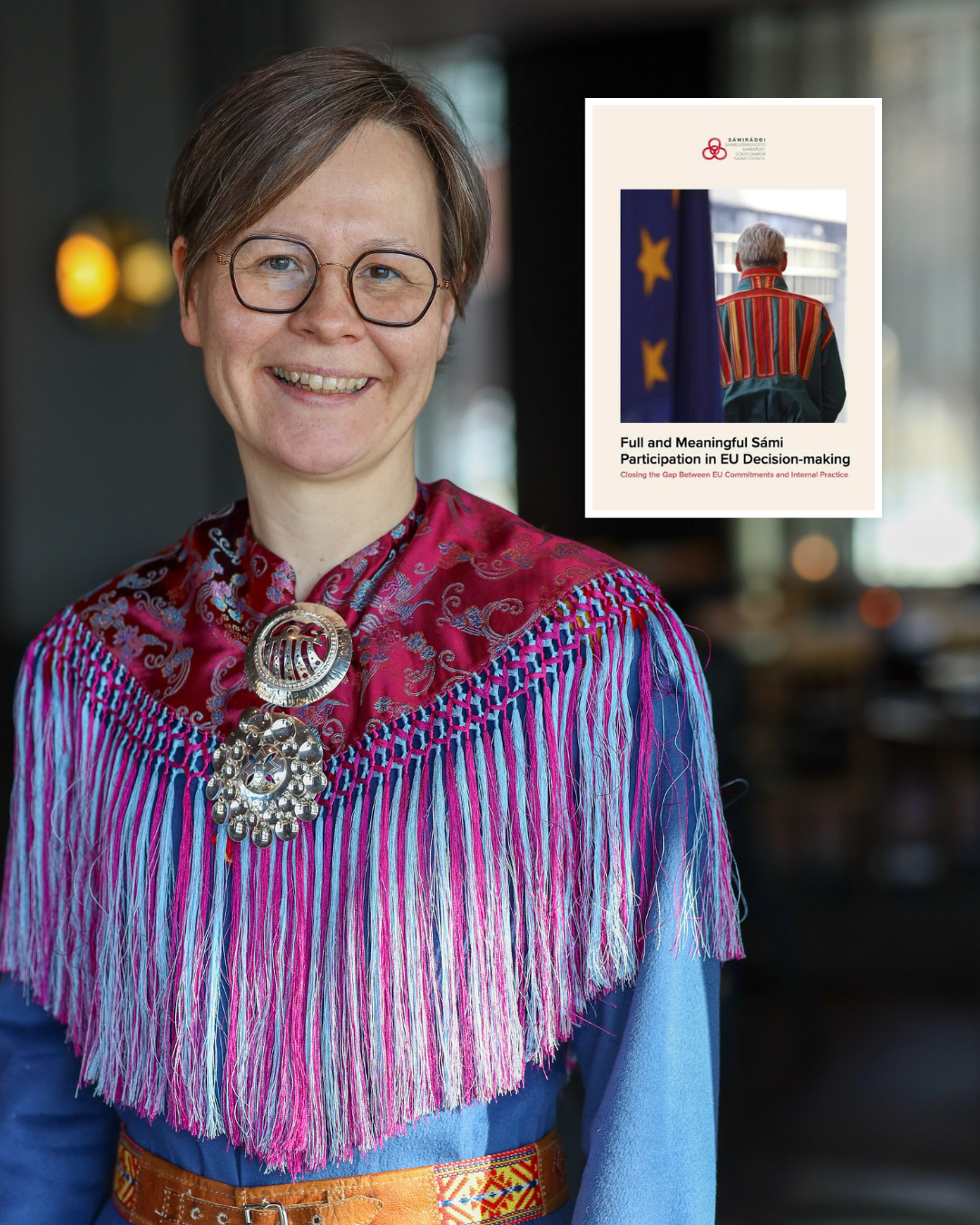
Elle Merete Omma, Head of the EU Unit at the Saami Council.
Photo: Fanny Larsson-Auna.
The report addresses this internal-external gap as EU initiatives – ranging from green transition policies and strategic raw materials to regional funding – exert growing influence over Sápmi. The study demonstrates that institutional mechanisms can be adapted to accommodate Indigenous Peoples’ participation, drawing from precedents such as the Arctic Council, Council of Europe, and existing EU strategic frameworks.
Key recommendations include:
- Establishing a dedicated Sámi coordination function within the European Commission.
- Creating formal, structured dialogue platforms between EU and Sámi representative institutions.
- Developing traineeship and secondment pathways to build long-term capacity.
- Securing dedicated funding mechanisms and formal consultation procedures.
Report 2: Assessment of Sámi Approaches to Circular Economy in an EU Policy Framework
Released October
The second report explores how traditional Sámi practices and worldviews can inform European sustainability policies. Built on group interviews with 21 Sámi knowledge holders across coastal fisheries, reindeer husbandry, and duodji (traditional handicrafts) the study focuses on the foundational Sámi concept of birgejupmi (northern Sámi, “ways to manage” or “ways to get by”).
“This report makes visible knowledge and perspectives that are far too rarely given space when the sustainable societies of the future are discussed.”
– Through the conversations, it has become clear that birgejupmi is not just about preserving traditions, but about living knowledge and practices that are of great significance for how we can understand and meet today’s sustainability challenges, says Karin Nutti Pilflykt, EU advisor at the Saami Council and authors of the report Assessment of Sámi Approaches to Circular Economy in an EU Policy Framework.
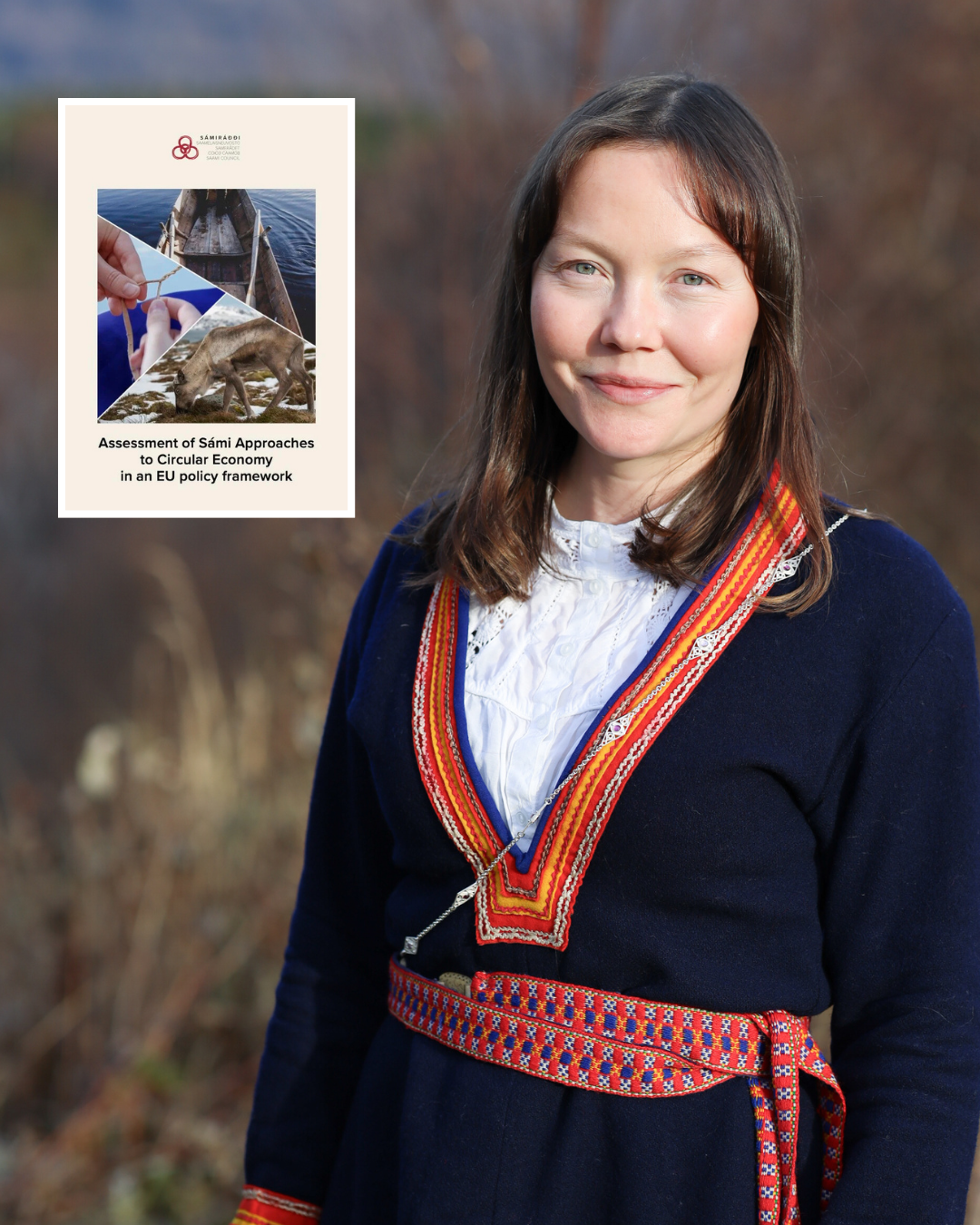
Karin Nutti Pilflykt, EU advisor at the Saami Council. Photo: Piera Heaika Muotka.
Birgejupmi represents a way of living adaptively with available resources while maintaining reciprocal responsibility toward lands, waters, and future generations. The study illustrates that circular practices are inherently embedded in Sámi life, but highlights how current regulatory structures often fail to accommodate traditional knowledge and rights.
– The report points to a fundamental challenge: today’s political and economic systems are not always designed to make room for small-scale, locally rooted ways of living and operating. Therefore, it is important that Sámi experiences and knowledge are not only highlighted, but are also given real influence over the decisions and policies that shape the future in Sápmi, says Karin Nutti Pilflykt.
Key highlights include:
- 20 Targeted Recommendations: Outlining actionable steps to ensure the EU’s transition toward a circular economy supports, rather than undermines, the rights of Indigenous Peoples and their self-determination.
- Locally Grounded Solutions: Calling for EU recognition of Indigenous Peoples' knowledge systems on their own terms, ensuring sustainable resource policies reflect lived realities on the ground.
