
New KulturSápmi Declaration Published!
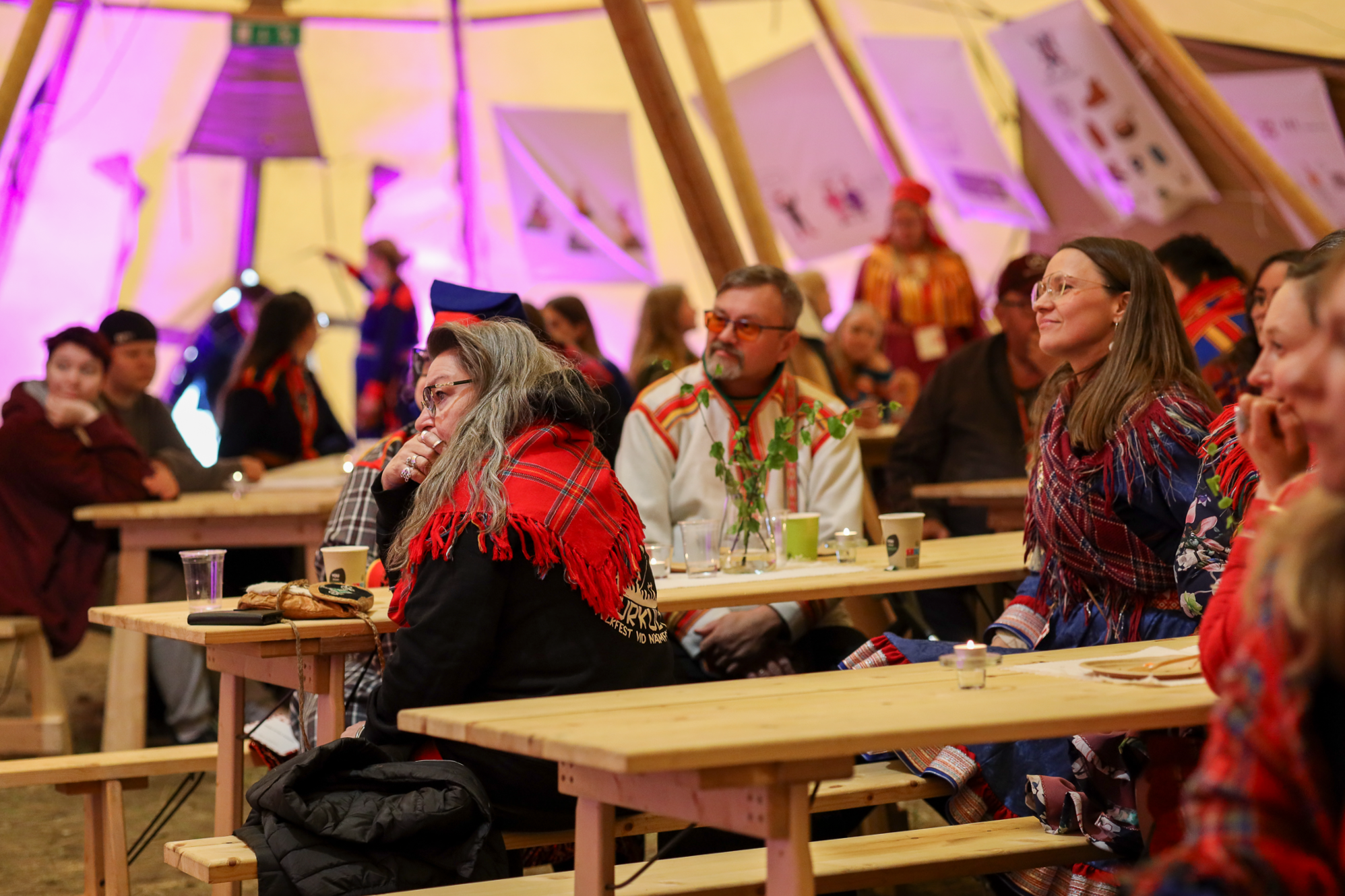
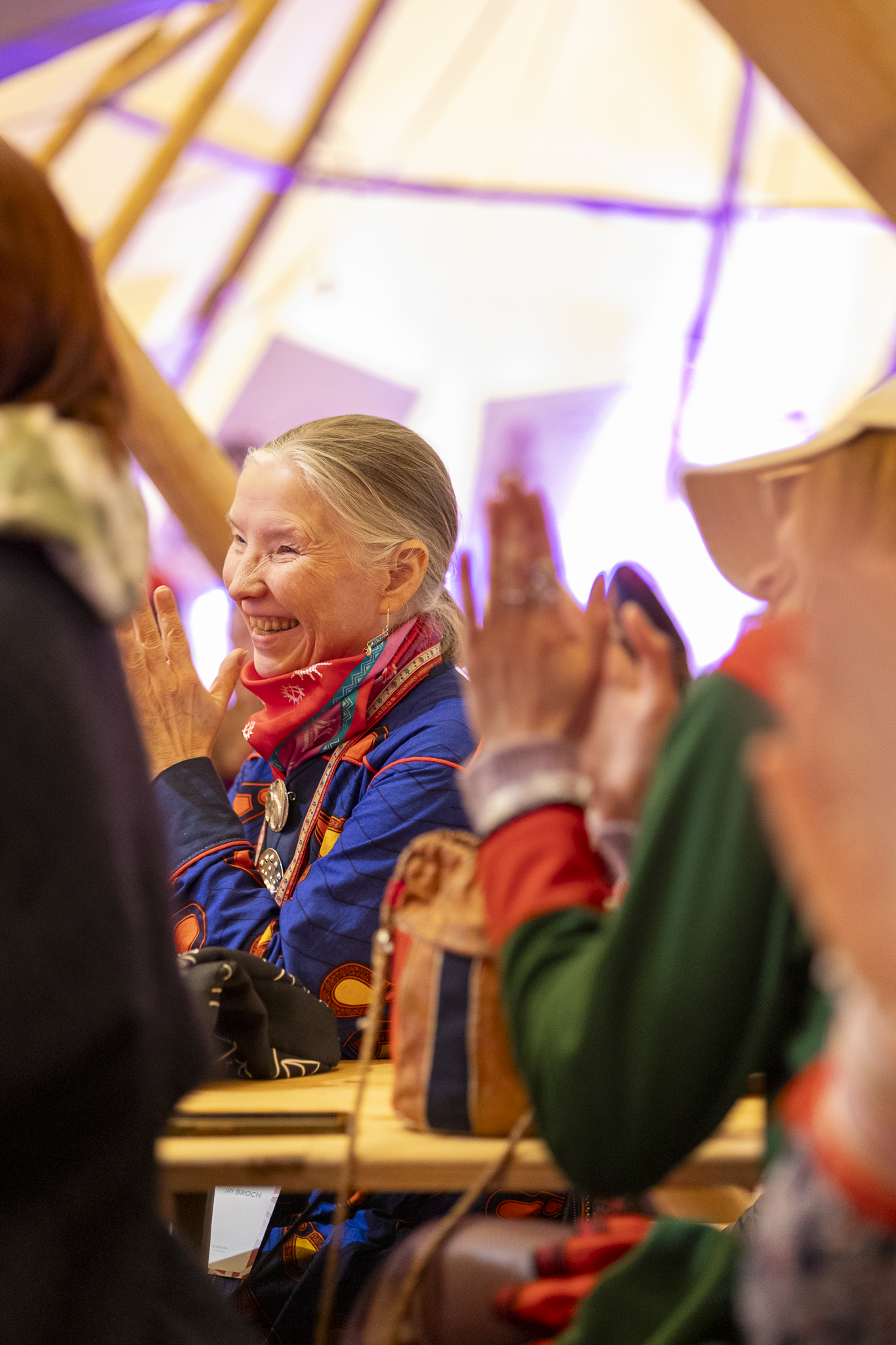
KulturSápmi has been held since 2019 and is the only cross-border meeting place for the Sámi art and cultural sector. Foto: The Saami Council.
In June 2026, KulturSápmi was held in connection with the 23rd Saami Conference. On site in Ohcejohka/Utsjoki, around 100 Sámi art and cultural workers gathered from across Sámeednam.
Over three days, participants met to discuss current events and share experiences. The program included work-in-progress presentations where art and cultural workers talked about their ongoing projects, and the Saami Council Literature Prize was awarded.
In connection with KulturSápmi, a declaration is published every year to summarize and highlight the key message from the discussions. This year's declaration reminds us that we are one people despite our differences, and shows how bierggim/birgejupmi guides Sámi life and creates a foundation that leads us forward. The declaration also contains seven recommendations.
More information:
Christina Hætta
christina(at)saamicouncil.net
+47 48 02 17 34
The KulturSápmi Declaration, Utsjoki 2026
We seek togetherness, belonging, and equality
“The will of nature and the Creator’s sermon give greatness its value—for the delight of the eye and as a journey of discovery for future generations, to find the discoveries of our ancestors and to adore their depths”
Introduction
KulturSápmi recognizes that the Sámi languages, culture, literature, the spiritual and musical languages (luohti, livđe, leu’dd, vuolle, and vuelie), traditional knowledge of Sámi duodji (crafts), and the arts together form the essential foundation of birgejupmi—the ability to live well and sustain oneself by taking from nature only what is needed. They play a decisive role in strengthening identity, building community, and shaping the future. Therefore, we remain committed to creating spaces that support the vitality, development, and intergenerational transmission of Sámi culture.
Birgejupmi guides Sámi life and provides the foundation that has sustained our people throughout history. It signifies not only self-sufficiency or survival, but also the ability to live in relationship with the land, with other people, and with future generations. Birgejupmi is rooted in values that Sámi societies and cultures have shaped across generations: responsibility, community, respect, and the ability to use resources sustainably.
Key Points
We ask permission and enter into dialogue with the land through our spiritual and musical languages and melodies—whether through luohti, livđe, leu'dd, vuolle or vuelie. You yourself know which language belongs to your family—the one through which you remember your home. Jiõčč ton teâdak.
We Sámi communicate with one another through a silent language. Sámi handicrafts, embroidery, colours, shapes, beads, and many other distinctive features tell of belonging, marital status, craftsmanship, and much more. (Silence. Pause.) Gákti, gábdde, gapta, gápptie, gaeptie, mááccuh, mácēh, mäccak and mäccaǩ —the various Sámi traditional garments—carry with them the stories and histories of our families. They do not need to be spoken aloud; you already know. Jieš ton tiäđáh.
What expectations are placed upon Sámi artists? What does it mean to be a Sámi artist, musician, writer, or maker of Sámi handicrafts in our time? Must we always explain to outsiders what it means to be Sámi? Where is the space for art that is created solely for ourselves—for Sámi people? Should our community embrace different roles and responsibilities? Who educates others about Sámi culture, and who strengthens and empowers our cultural heritage from within our own communities? Is it the case that most of our resources are directed toward protecting our lands and defending our rights? If so, little time remains for our internal conversations—for revitalizing our languages and cultures.
Cultures cannot survive without languages. We are one people—across borders, in a borderless Sápmi. May our languages live and be heard, these golden tongues. We are one people, even as we are diverse and enriched by our many languages and dialects. Children and young people must hear and learn the languages and heritage of their foremothers and forefathers. When we lose our languages, we also lose our connection to our lands.
Sámi cultures are living cultures. They live with us and beside us through all times—past, present, and future. Traditional knowledge flows into the present along many paths and through countless streams. That flow must reach every child and young person, must it not? Everyone should have the opportunity to strengthen their own language and culture, whether guided by elders, relatives, archives, or collections. You know what the right path is for you.
Förut önskade vi förändring; nu börjar vi.
Vi samer måste använda vårt eget tysta språk i högre grad. Vår duodje talar detta tysta språk. Genom formen på våra kläder avslöjar den var varje person hör hemma. Vissa huvudbonader visar om bäraren är gift eller ogift, och i vissa regioner förmedlas samma budskap genom knapparna på ett bälte. Färger och smycken bär också på viktiga betydelser.
Statliga myndigheter vet inte allt och de förstår inte heller alltid vad vi försöker kommunicera. Därför måste vi tydligare och oftare förklara de utmaningar som vi samer står inför – särskilt hur nationsgränser begränsar utvecklingen av vår kultur och samarbetet över Sápmi, och hur tullbestämmelser gör ett sådant samarbete svårt och onödigt komplicerat.
Vi samer ägnar alltför mycket av vår tid åt att försvara våra rättigheter när den tiden i stället kunde ägnas åt att stärka vår kultur. Det är avgörande att nära och föra vidare våra egna sätt att tänka, vår traditionella kunskap och våra arbetssätt till samiska barn och ungdomar.
För oss samer utgör jojken och dess melodier ett gränslöst, tyst språk av dialekter.
Andligheten har följt oss sedan urminnes tider, genom varje era och varje prövning. Den har anpassats till nya regler och tagit sig nya former, men den har bestått.
I denna nya era inser vi att den samiska andligheten trots allt inte har försvunnit, även om många trodde det.
Länge leve vårt kulturarv.
Recommendations
We will gather, spend time together in lávvus, share time across generations, raise and discuss our own issues, make Sámi handicrafts, and dance together.
We aim to strengthen Sámi arts and cultural education and create opportunities for learning across generations.
We must ensure that our traditional knowledge remains within our reach and that the knowledge held in archives, museums, by Elders, and by cultural workers—our stories, concepts, writings, and handicrafts—is preserved and accessible.
Language—all Sámi languages must be heard, respected, and taken into account.
A borderless Sápmi—many languages and cultures, all equal.
We need increased funding for Sámi cultural practitioners so that our heritage and culture can be passed on to future generations.
We must revitalize traditional knowledge and strengthen our relationship with repatriated Sámi handicrafts.
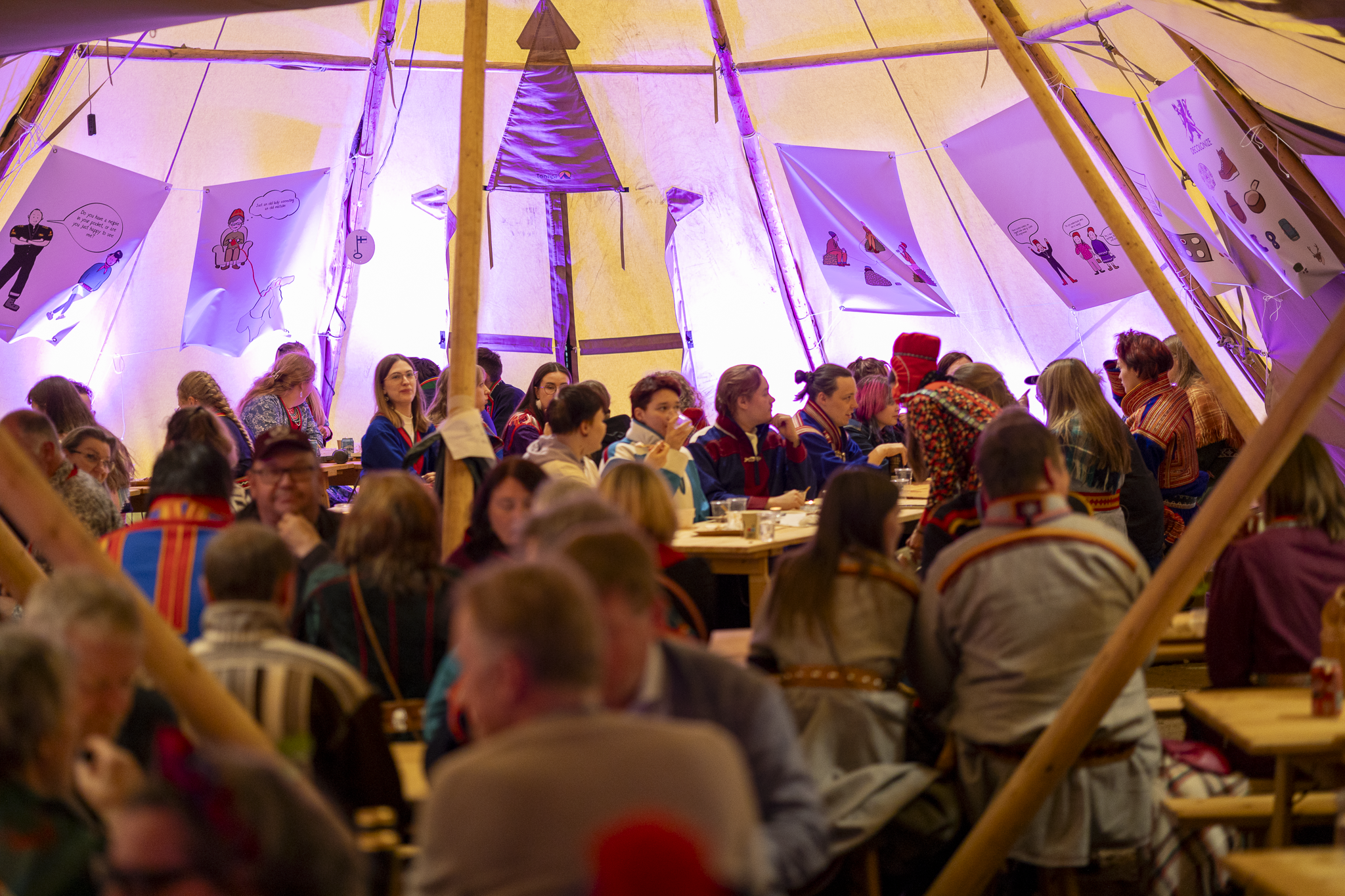
Foto: The Saami Council