
Opening address by the President of the Saami Council at the 23rd Saami Conference
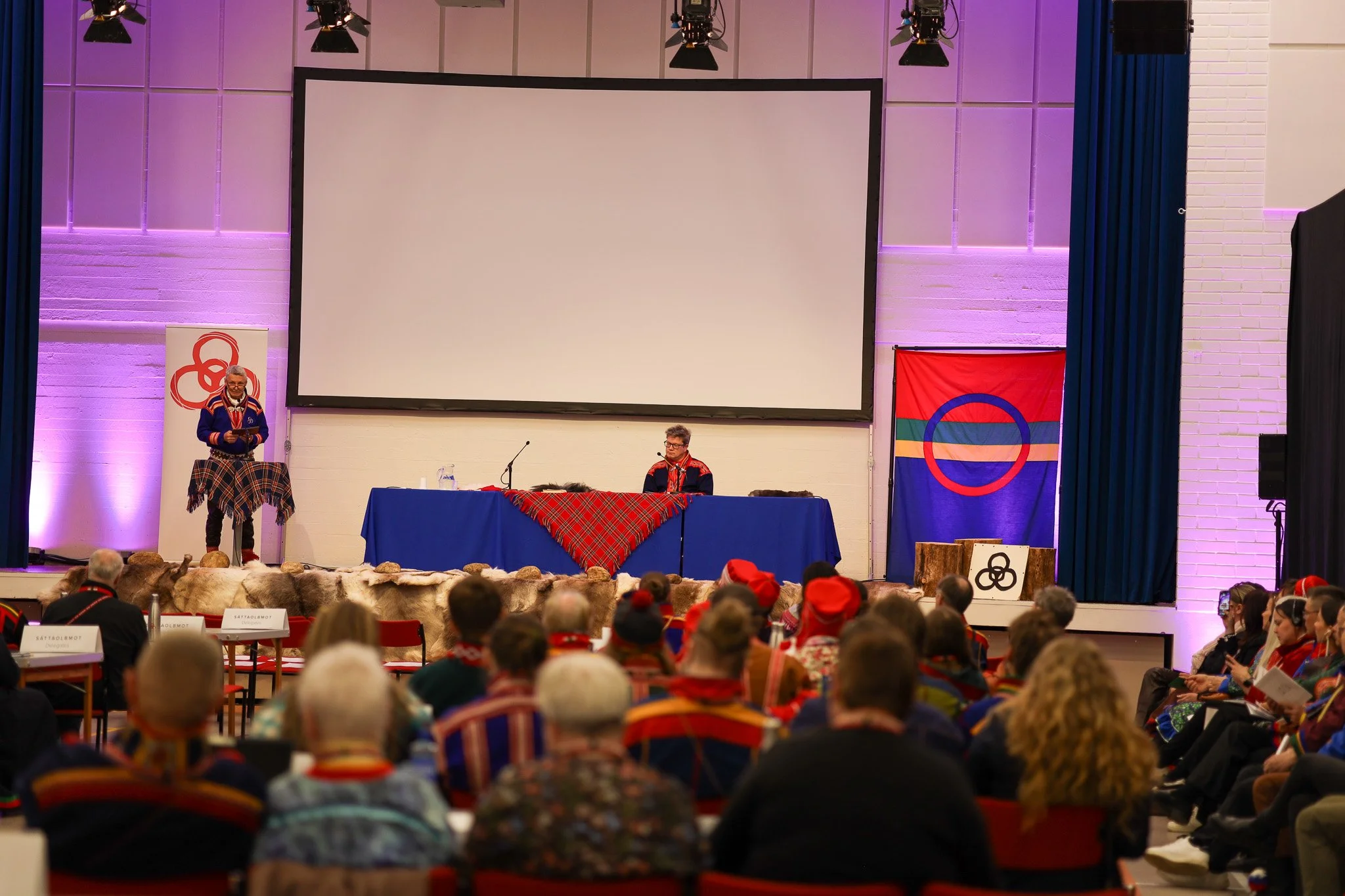
Photo: Saami Council / Piera Heaika Muotka
Delivered by the President of the Saami Council, Per-Olof Nutti, at the 23rd Saami Conference in Ohcejohka/Utsjoki on 18 June 2026.
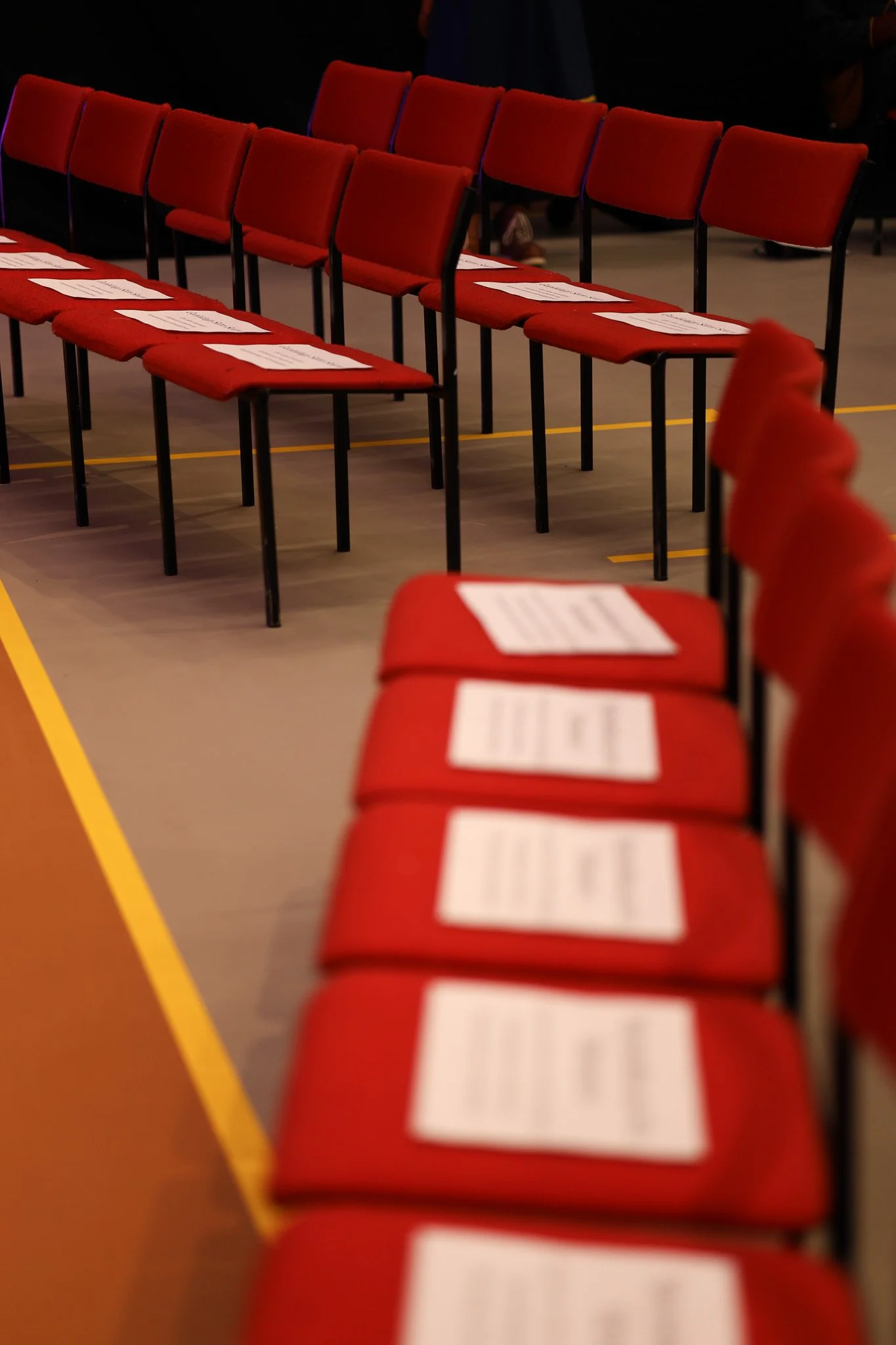
Empty chairs in the conference room.
Photo: Saami Council / Piera Heaika Muotka
Honourable delegates. Honourable guests.
It is a great honour for me to welcome you to the 23rd Saami Conference here in Ohcejohka/Utsjoki. One might say that we have come home.
It is great to be here, because the Saami Council has a special connection to Ohcajohka/Utsjoki. Our Secretariat was located here from 1979 until 2014 – for a full 35 years.
It is also worth noting that the last time the Saami Conference was held here in Ohcajohka/Utsjoki, in 1983, it was the first conference in which a Sámi person from the Soviet Union participated and met with other Sámi people. Although they had been invited to take part from the very beginning, until then, only researchers had attended from the Russian side.
After this, at the 15th Saami Conference in 1992, the Kola Sámi Association was admitted as a member organisation of the Council, and thus the Sámi on the Russian side took part for the first time as an official delegation at the conference. As a result, the name Nordic Saami Council was also changed, and from then on it was simply called the “Sámi ráđđi - Saami Council”. In 1996, the Saami Conference was held in Murmansk. This was the first time Sámi from all countries gathered on the Russian side of Sápmi.
For us, the Sámi people, it is both regrettable and painful that this is already the second Saami Conference where the chairs of the delegates from the Russian side – our sisters and brothers – stand empty. You can see them physically here in the meeting room, the empty chairs, as a reminder to everyone that the representatives from the Russian side of Sápmi are deeply missed.
Gathering in Ohcajohka/Utsjoki for the Saami Conference also evokes sorrow. In 1974, six people from this area died when the plane disappeared on its way to the Saami Conference. They were key Sámi politcal actors, and this has had a profound impact on our society. On Saturday, we will hold a memorial ceremony in their honour.
Dear friends. Today we are opening the 23rd Saami Conference. Many have already been here since Monday. The Saami Council has organised the third youth gathering – Gávnnadeapmi 3 – and I am glad to hear that the young people see a future in Sápmi.
KulturSápmi – the only meeting place for Sámi arts and culture that encompasses all of Sápmi – has also been held. Among other things, Dájdakodisilla was launched there, and many other interesting discussions took place.
The InterReg project Sápmi Buorrin has organised a duodji gathering that brought together duodji practitioners from across Sápmi. This is something duodji practitioners have been asking for over a long time. This week, we have also had the opportunity to experience short films, podcasts and litterature. These events show only part of the Saami Council’s broad activities, which we hope will benefit Sámi society.
Sápmi – our lands, our waters and the foundation of our culture – is also an Arctic region. Our peaceful region is changing rapidly, and external threats are increasing. We are experiencing a cchaning geopolitical situation, rapid developments in security policy, and global human rights are under pressure. In addition, our lands and waters are changing as a result of climate change. We are seeing growing demand for critical minerals and renewable energy, as well as strong interest in strategic infrastructure.
Sámi issues are becoming part of complex strategic discussions in which security issues, economic interests, climate policy and the rights of Indigenous Peoples are closely intertwined. Our work for Sámi self-determination does not stop in Sápmi, nor at the borders of nation states; it requires us to take our place in the largest international arenas.
That is why the Saami Council’s deliberately work in relation to the EU, the UN and the cooperation in the Arctic Council has become increasingly important.
The EU and the UN make decisions every day that directly affect our lands, our natural environment, our traditional livelihoods and our culture. Brussels, New York, Bonn and Geneva do not take Sámi rights as their starting point when shaping their decisions. Therefore, we must be present and seek to influence these processes.
This is comprehensive work that we cannot carry out alone. If we are to succeed, we need broad cooperation across national borders. When we stand together and speak with one common voice to the outside world, we ensure that the green transition and future land management do not take place to the detriment of the Sámi people’s rights, but instead respect them – for the benefit of a unified Sápmi.
As we shape our future, we must also own our own story about who we are and what we need. Decisions that affect Sápmi have for far too long been made on the basis of knowledge produced from the outside. Instead, we must produce the knowledge we need ourselves, because knowledge is the foundation of all political and societal decisions.
The Saami Council has therefore made a strategic choice to participate in knowledge production. This is about reclaiming the power to define – the power of definition. When we ourselves own our data and govern research, we ensure that our values, our traditions and our needs form the basis for the future. We should no longer merely be object of research – we should rather determine the answers ourselves.
I will conclude with the words of the local poet Lemehaš-Biehtár – Pedar Jalvi, from the final part of the poem The Snowflakes– Muohtačalmmit:
Before the face of the spring sun
the small snowflakes melt
into shimmering streams.
In the streams they gather
into brook, river, lake, sea
– great then is their power.