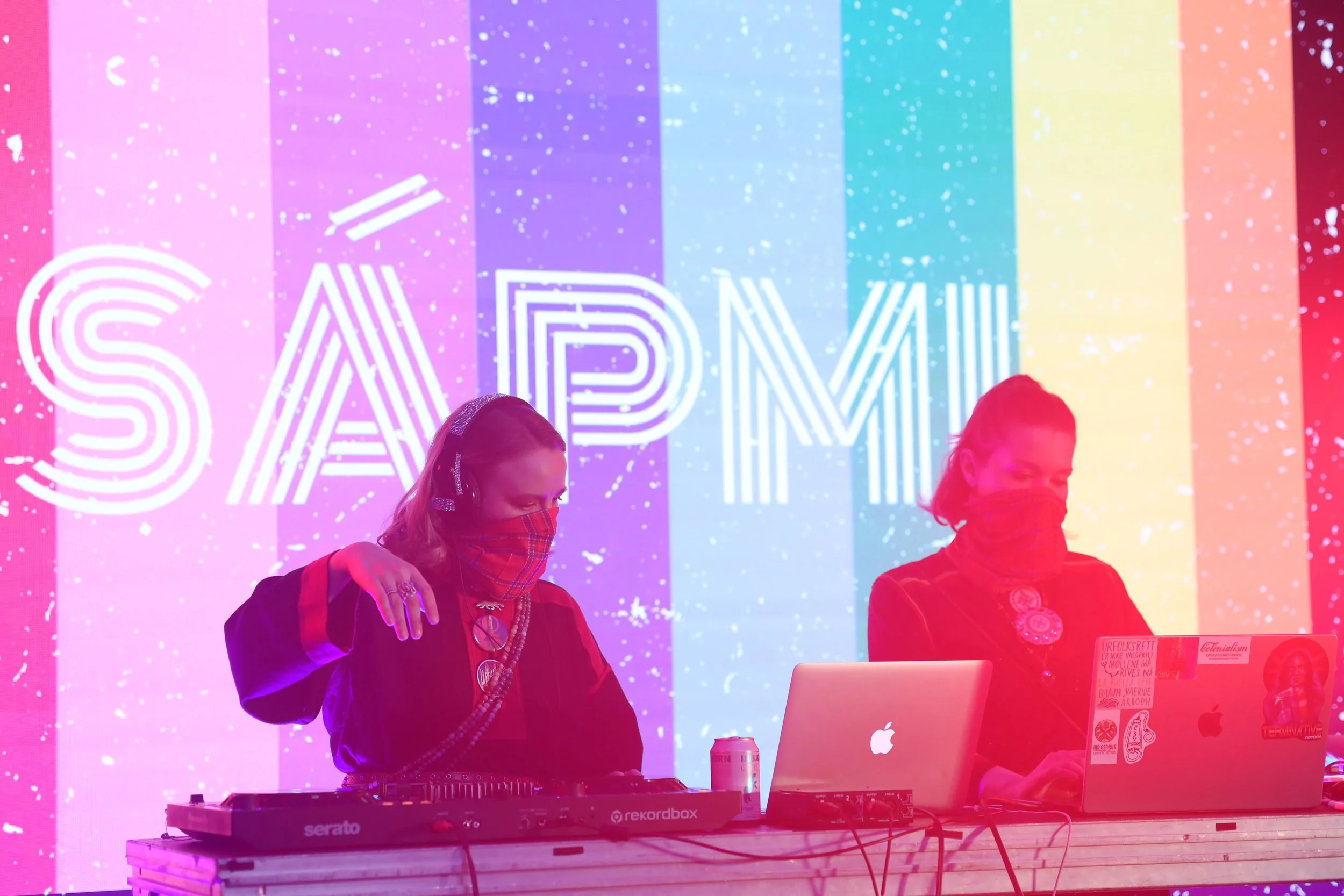
Photo: Carl Johan Utsi




Sápmái Buorrin – Building the Future of Sámi Businesses
An Interreg Aurora funded cross-border project initiated in 2025 by Suoma Sámiid Guovddášsearvi (SSG), Saami Council and Sámi Duodji – Sameslöjdstiftelsen, with a project period from 2025 to 2028.
Sámi businesses operate in a global market where authenticity, visibility and fair market conditions are increasingly challenged. Copying of Sámi products, weak recognition of genuine Sámi craftsmanship and limited access to professional branding make it harder for Sámi businesses to grow on their own terms.
Sápmái Buorrin is a cross-border project created to strengthen Sámi businesses by improving market access, branding and long-term competitiveness – while safeguarding Sámi cultural heritage. By increasing the visibility of authentic Sámi products, the project supports sustainable and independent Sámi entrepreneurship and contributes to a more transparent and trustworthy market.
In November 2025, the project was launched by Suoma Sámiid Guovddášsearvi (SSG), Saami Council and Sámi Duodji – Sameslöjdstiftelsen as an Interreg Aurora funded collaboration across Sápmi.
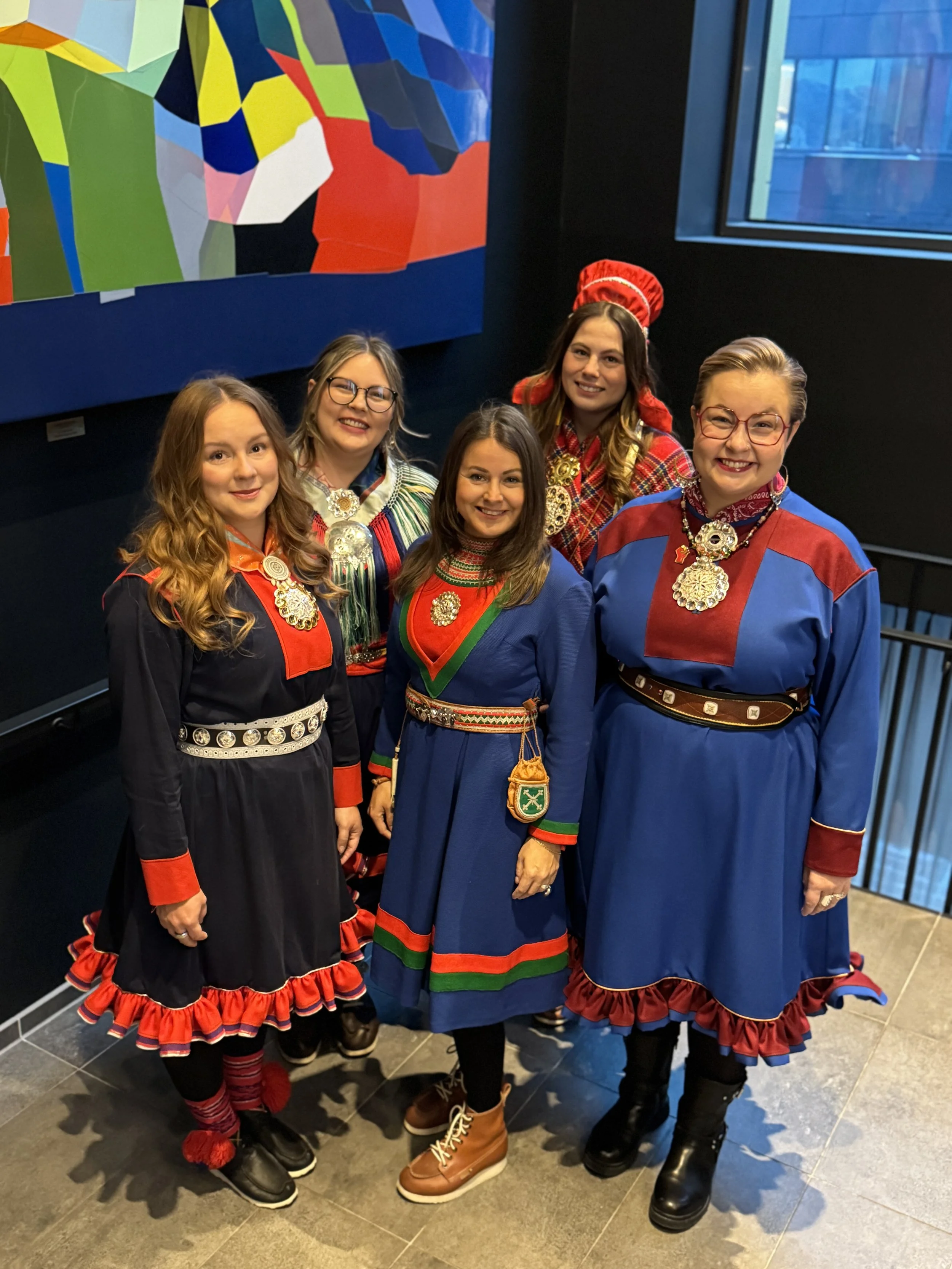
The project team. From the left: Enni Similä, Sanne-Ristin Bengtsson, Johanna Tjäder, Mariann Josefsen and, Enni Nuorgam
“Most of our businesses make their living from Sámi culture, and when Sámi products are made visible in larger markets, the financial value returns to our own communities. In this way, Sámi culture creates livelihoods today while also protecting our cultural heritage for future generations ”
Project Goals
Sápmái Buorrin’s goal is to create a stronger, united and visible Sámi business network across the borders.
This project introduces new strategies for Sámi businesses, opening opportunities that have never been explored before. To strengthen Sámi businesses, the project will test market expansion strategies in three pilot cities, placing authentic Sámi products in high-visibility locations such as hotels, stores, and transportation hubs.
We are committed to making genuine duodji and Sámi products widely recognized, ensuring buyers can easily find and support authentic Sámi products offering a valuable alternative to counterfeit products.
A key focus is enhancing the professionalism of Sámi SMEs by providing them with training courses, mentorships and drivers for youth to start their businesses. These activities will improve their business presentation, overcome barriers to cross-border trade and develop effective marketing strategies. By advancing market access and capacity-building, the project paves the way for a stronger, self-sufficient Sámi economy.
Bring money flow back to the Sámi community
Non-Sámi imitations flood the market, reducing the visibility and profitability of authentic Sámi products. This oversaturation limits the ability of Sámi businesses to expand, as consumers struggle to recognize and choose authentic products. With stronger consumer awareness and clearer product identification we benefit the Sámi community itself and risk of Sámi cultural heritage being lost to exploitative markets decreases.
Strengthen businesses
With a cross-border strategy we ensure wider recognition and market presence for Sámi products. We strive to support both SMEs that wish to remain small and scalable Sámi enterprises, This includes tailored marketing efforts and capacity-building courses. Both groups share a common goal: to safeguard Sámi culture, no matter who their customers are.
Protect Sámi Culture identity
This project promotes ecological sustainability by strengthening Sámi businesses that rely on traditional knowledge, ethical production, and sustainable resource use. Duodji and Sámi businesses follow slow production, use natural materials, and apply circular economy principles, minimizing environmental impact while preserving cultural practices. A key goal is to develop a sustainable marketing model that highlights high-value, ethically and sustainably sourced Sámi products over low-value mass production.
Develop sustainable marketing models
Sámi businesses often lack the financial resources and marketing capacity. Many operate as small, independent ventures, making it difficult to secure visibility in broader markets. The absence of strong support structures further weakens their ability to protect intellectual property and establish collective branding efforts.
Build recognition of trademarks
This project builds on previous Sámi trademark efforts. The Sámi Duodji trademark, established in the 1980s, was renewed in 2022 with an updated Sámi Duodji and new Sámi Made trademarks. Sámi entrepreneurs across Sápmi have adopted these trademarks, and their feedback has shaped the project's priorities.
A lack of clear labeling and certification for Sámi products has left many consumers, particularly tourists, unable to distinguish between authentic and mass-produced goods. A unified Sámi branding strategy is essential to maintain the credibility of Sámi trademarks. Reinforcing Sámi trademarks and sustainable business models fosters cross-border cooperation, strengthening Sámi entrepreneurship and expanding market opportunities.
News




Events



These actions we’re going to make
The project develops self-sustaining models for Sámi SMEs and trademarks, ensuring businesses thrive beyond the project's duration. By reinforcing economic and cultural sustainability, Sámi duodji businesses can grow independently.
Roadmap for the Future
A structured roadmap will embed project outcomes into a long-term implementation framework, ensuring Sámi SMEs and trademarks continue evolving. A revised marketing plan based on best practices from the Pilot Cities Initiative will serve as a sustainable Sámi branding model.
Pilot Cities as Business models
Pilot cities will showcase how Sámi products can integrate into mainstream marketplaces. To support growth, the project will establish strategic partnerships, securing long-term market opportunities for Sámi SMEs.
Digital Learning & Business Development
The Digital Learning Lávvus provides valuable digital resources on the Sámi Trademark webpage. Open-access materials on cross-border trade and market expansion will offer Sámi entrepreneurs practical tools to strengthen and grow their businesses.
Digital Sámi Business Catalogue
The Sámi Business Catalogue will remain active and self-sustaining, expanding organically as new businesses join the Sámi trademarks. This ensures ongoing relevance with minimal effort, making it easier for buyers to find authentic Sámi products and businesses.
Mentorship & Growth
An intergenerational mentorship program will help young Sámi entrepreneurs establish sustainable businesses, serving as a best-practice model. The Home Residency Program will connect experienced professionals with young Sámi entrepreneurs, strengthening business expertise and preserving traditional skills.
Export & Expansion
The project will collaborate with export offices in the program area, helping Sámi businesses expand internationally. A Sámi Duodji and Design Export Opportunity Guide will provide market insights and distribution strategies, ensuring Sámi craftsmanship reaches a wider audience.
Our target Groups
As a Sámi-led initiative, the project ensures solutions are tailored to Sámi needs, empowering businesses and preserving cultural integrity. Extensive consultations with Sámi businesses, industry organizations and artisans have guided the project's aims. An advisory group will provide ongoing guidance and support throughout the project.
Sámi entrepreneurs and businesses
The primary target group of this project is Sámi entrepreneurs and businesses operating in cultural industries, including producers of duodji and Sámi products. These businesses are often small, family-run, or micro-enterprises with limited access to marketing, product distribution, and financial support. The project will also engage young Sámi entrepreneurs to ensure the next generation views Sámi industries as viable careers.
Retailers and tourist operators
The project partners with retailers, tourism operators, and commercial hubs to expand market access for Sámi products. By promoting sustainable retail practices, it increases visibility, consumer trust, and sales of authentic Sámi goods in stores, hotels, museums, and visitor destinations.
Customers
To increase demand for authentic Sámi products, the project engages consumers through branding, education, and digital outreach. By ensuring Sámi products are accessible in various retail locations, it empowers customers to make informed, ethical purchases that directly support Sámi businesses and preserve cultural heritage
Our Team

Enni Similä
Prodject manager
Emmi Nuorgam
Project advisor
Sámi Duodji - Sameslöjdstiftelsen Sweden
Tel: +4673 034 4478
E-mail: sanne-ristin@sameslojdstiftelsen.com
Project advisorSanne-Ristin Bengtsson

Project advisorJohanna Tjäder

Project advisorMariann Josefsen
Founders
The project is funded by Interreg Aurora, Lapin Liitto, Sami Parliament in Norway, Troms county municipality, Trøndelag county municipality, The Norwegian Barents Secretariat,Region Norrbotten, Region Västerbotten, Region Jämtland Härjedalen and Västernorrland.